

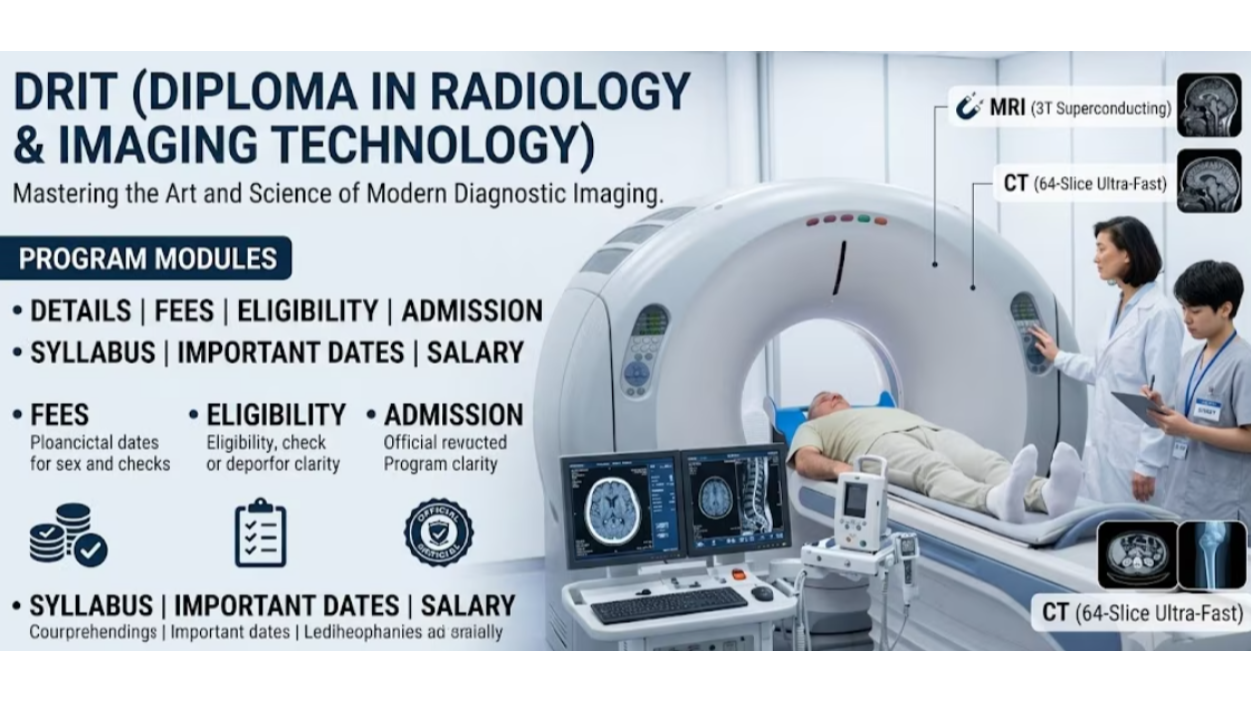
Students exploring radiology careers frequently see two options an X-Ray technician course and DRIT, or Diploma in Radiology and Imaging Technology. The titles may appear similar, but their subject coverage and qualification level can differ. Before selecting a DRIT course in Pune, students should compare the curriculum, practical exposure and intended career outcome of each program.
An X-Ray technician course usually concentrates on radiographic procedures. Students may learn patient positioning, X-ray equipment operation, image formation, radiation safety and basic anatomy. The scope can vary considerably depending on whether the program is a certificate, diploma or another qualification.
DRIT generally suggests a diploma-level program with broader exposure to radiology and imaging concepts. Depending on the approved syllabus, it may introduce conventional radiography and additional imaging principles. Students should verify exactly which modalities are taught because the words imaging technology do not automatically mean that every institute provides practical training in CT, MRI or other advanced systems.
A practical comparison can be made across several areas.
Course scope
An X-Ray-focused program may suit students who want concentrated training in basic radiography. DRIT may provide a wider academic foundation, subject to the actual syllabus.
Duration and eligibility
Program length and entry criteria vary. Students should confirm whether admission is available after Class 10, Class 12 or a specified science background. They should also identify the awarding authority.
Practical training
Both routes require hands-on learning. Candidates should ask how many practical sessions are scheduled, what equipment is accessible and whether supervised clinical exposure is included.
Career direction
Graduates may explore roles in hospitals, imaging centres, orthopaedic clinics and diagnostic facilities. The position for which a student is eligible depends on the completed qualification, practical competence and employer requirements.
Further education
Students who plan to advance into degree-level imaging education should verify whether their chosen diploma is accepted for lateral entry or further study. Admission policies differ among institutions.
Radiology demands strong safety awareness. Learners must understand controlled exposure, protective equipment, patient identification and correct positioning. The profession also requires calm communication because patients may be in pain, have mobility limitations or feel anxious about the procedure.
Students should be cautious when a course description makes broad claims about operating advanced imaging equipment without explaining the practical arrangements. Familiarity with terminology is different from supervised competency. Asking to see the laboratory, training setup or practical schedule can provide clearer information.
Another point to evaluate is the teaching of digital imaging systems. Modern radiology increasingly involves digital image acquisition and electronic record management. A relevant program should help students understand how imaging workflows have evolved while still teaching essential radiographic principles.
Pune’s diagnostic sector includes independent imaging centres, specialist hospitals and multispeciality facilities. Students from Pune and across Maharashtra can use this regional context to evaluate what qualifications and competencies employers currently seek.
KP Paramedical Institute PCMC offers paramedical study options for learners interested in radiology-related careers. Students considering DRIT can ask the institute for the latest syllabus, duration, admission criteria, equipment exposure and certification information.
Neither course should be selected solely because its title sounds advanced. The better choice is the program that matches the student’s eligibility, provides credible practical learning and supports the intended career or educational pathway. Comparing these details can help candidates avoid unsuitable enrolment decisions and begin their radiology training with realistic expectations.