

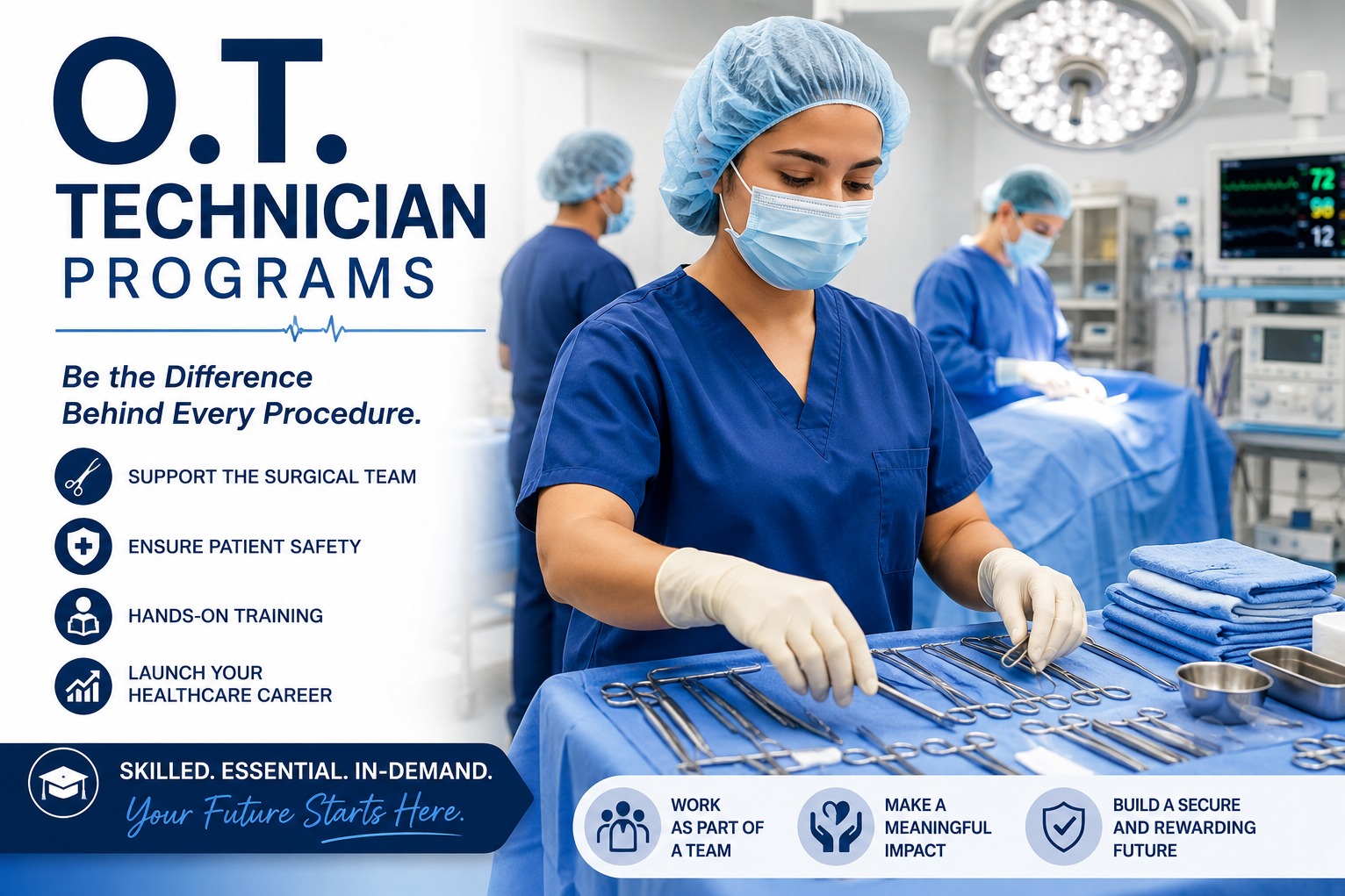
An operation theatre is a controlled clinical environment where preparation, hygiene and teamwork play an important role in patient safety. Surgeons, anaesthesia professionals and nurses are supported by trained personnel who help prepare the theatre, organise equipment and maintain established sterile procedures.
Students evaluating O.T. Technician programs in PCMC should understand that the role requires discipline, attention to detail and emotional composure. KP Paramedical Institute introduces learners to career-focused paramedical education connected with healthcare-support responsibilities.
What Does an O.T. Technician Do?
An operation theatre technician supports authorised clinical personnel before, during and after surgical procedures. The exact responsibilities depend on the healthcare facility, qualification and level of supervision.
Duties may include:
- Preparing the operation theatre
- Checking assigned equipment and supplies
- Arranging instruments as directed
- Supporting sterile-area protocols
- Assisting with patient transfer
- Helping with patient positioning
- Maintaining stock records
- Sending instruments for sterilisation
- Preparing the theatre after a procedure
- Segregating biomedical waste
- Reporting faulty or missing equipment
An O.T. technician does not perform duties reserved for surgeons, anaesthesia professionals or qualified nursing personnel.
Essential Skills Developed During Training
A well-structured course should develop technical awareness as well as consistent professional habits.
Important areas include:
- Aseptic practices: Understanding how sterile conditions are created and maintained.
- Instrument recognition: Learning the names and categories of commonly used surgical instruments.
- Equipment readiness: Checking assigned devices and reporting problems promptly.
- Patient safety: Supporting patients respectfully while protecting their dignity.
- Waste management: Following biomedical waste-segregation procedures.
- Documentation: Maintaining accurate stock and usage records.
- Team coordination: Responding clearly to instructions in a time-sensitive setting.
- Emergency awareness: Understanding how concerns must be escalated.
These abilities require repeated supervised practice. Classroom instruction alone cannot build reliable theatre habits.
Training Gaps Students Should Avoid
Not every O.T. Technician program provides sufficient practical exposure. Students should be cautious if a course offers only lectures or has limited access to relevant instruments.
Other warning signs include:
- No written syllabus
- Unclear awarding authority
- Limited infection-control instruction
- No supervised clinical exposure
- Overcrowded practical sessions
- Unexplained additional fees
- Guaranteed employment claims
- No practical evaluation
- Incomplete certification information
A credible institute should clearly explain what learners will study, practise and observe.
Questions to Ask Before Admission
Students should ask:
- Is the qualification a certificate or diploma?
- What eligibility requirements apply?
- Who conducts the examination?
- Is the qualification recognised?
- How many practical sessions are included?
- Is hospital exposure available?
- Which instruments are covered?
- Are sterilisation procedures taught separately?
- Is an internship included?
- What is the complete fee structure?
Preserve written course documents and payment records throughout the admission process.
Personal Readiness for Theatre Work
Operation theatre roles may involve shifts, long periods of standing and exposure to challenging clinical situations. Students need to remain composed and follow instructions without taking shortcuts.
Hospitals, surgical centres, maternity facilities and speciality clinics may offer relevant opportunities to appropriately qualified candidates. Selection depends on practical competence, qualification validity and employer requirements.
PCMC and the Pune metropolitan region have an extensive healthcare network. Choosing an O.T. Technician program with proper facilities, supervised practical exposure and transparent academic information can help students prepare for the responsibilities of an operating theatre environment.