

When students search for the Best O.T. Technician programs near me, course descriptions often appear similar. Most mention surgical instruments, sterilisation, operation theatre preparation and patient care. The meaningful difference lies in how these subjects are taught and whether students receive supervised practical exposure.
An O.T. Technician program should begin with foundational subjects such as anatomy, physiology, medical terminology and infection prevention. Students then need to understand the organisation of an operation theatre, the responsibilities of different team members and the procedures followed before, during and after surgery.
Practical readiness can be evaluated through several indicators.
Instrument training
Students should learn to identify commonly used surgical instruments and understand their general purpose. Practical sessions should teach safe handling, arrangement and counting procedures under supervision.
Aseptic technique
The program should explain sterile and non-sterile areas, hand hygiene, protective clothing and contamination prevention. These practices are fundamental to operation theatre safety.
Equipment familiarity
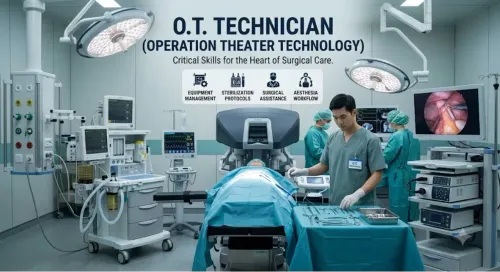
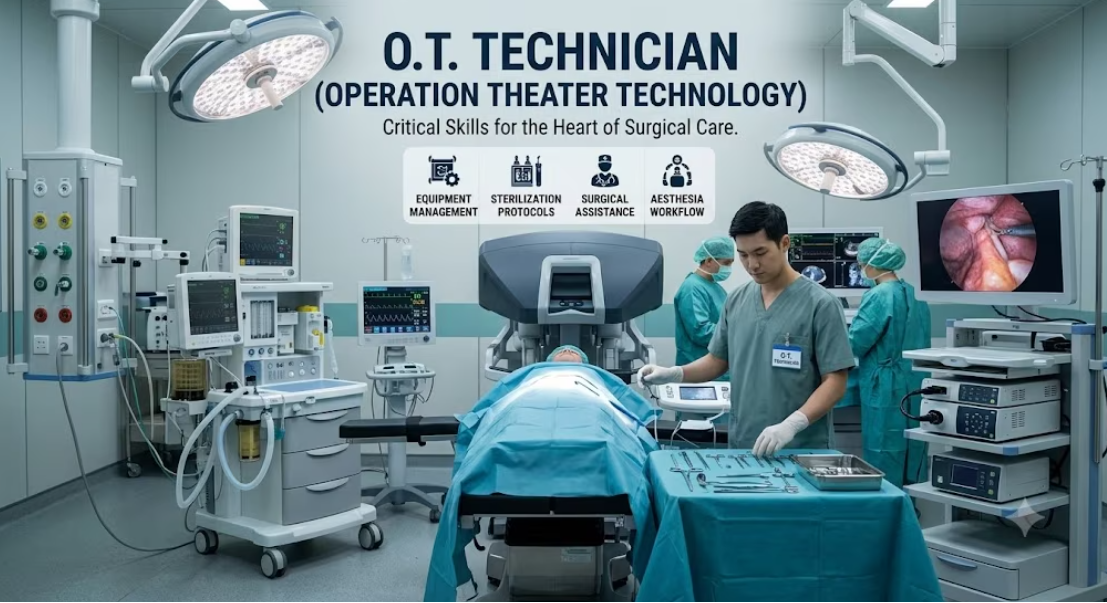
Students may be introduced to operation tables, suction equipment, monitors and other theatre systems relevant to their role. The institute should clearly distinguish between demonstration, observation and independent competency.
Scenario-based learning
Useful training presents realistic situations, such as missing supplies, compromised sterile materials or equipment-check concerns. Students learn how to report problems and follow the correct chain of responsibility.
Clinical exposure
Observation or internship experience can help learners understand theatre discipline, communication and workflow. Candidates should confirm whether such exposure is part of the program and how it is supervised.
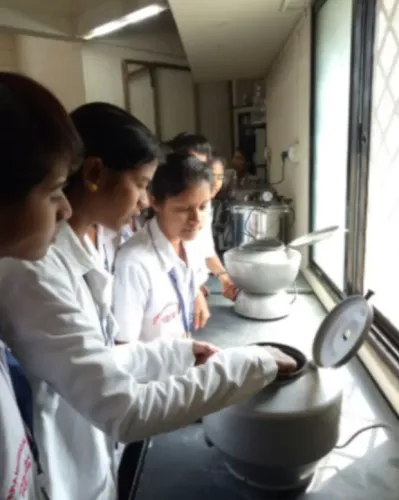
During an institute visit, ask to see the practical setup. Students do not need to judge every technical detail, but they can observe whether the space is organised and whether instructors can explain how practical classes work.
It is equally important to ask how performance is assessed. Written examinations measure theoretical knowledge, while demonstrations, practical tests and supervised observations help evaluate procedural understanding. A balanced assessment approach provides a clearer picture of student readiness.
Candidates should also clarify the limitations of the role. An O.T. technician supports qualified surgical and nursing professionals. The course should not suggest that graduates independently perform clinical procedures beyond their training or legal scope.
Pune has hospitals, day-care surgical centres and specialist facilities across areas such as Pimpri-Chinchwad, central Pune and the eastern and western suburbs. This regional healthcare network creates potential exposure to different clinical environments, but admission should still be based on verified educational quality.
KP Paramedical Institute PCMC offers an O.T. Technician training option for students interested in surgical support services. Candidates can enquire about the course syllabus, demonstration facilities, clinical exposure, qualification details and eligibility requirements.
Students should consider whether their personal qualities suit the field. Operation theatre professionals need punctuality, emotional stability, attention to detail and the ability to follow protocols consistently. They must communicate clearly and remain focused during demanding situations.
Parents and students should obtain a complete fee breakdown before enrolment. Ask whether examination, uniform, laboratory, study-material and certification charges are included. This makes it easier to compare programs fairly.
Selecting the right O.T. Technician course is ultimately about readiness for a responsible clinical environment. A program with transparent information, structured practical sessions and realistic career guidance offers greater educational value than one that relies on ambitious promises. Visit the campus, review the syllabus and ask specific questions before completing admission.