

Medical laboratory technology attracts students who enjoy biological sciences and want to contribute to diagnostic healthcare. However, choosing a course without checking its practical facilities, recognition or academic scope can create problems later.
KP Paramedical Institute provides information about Medical Laboratory Technician programs for students in PCMC. Before enrolling, applicants should recognise the common mistakes that can affect the value of their education.
Mistake 1: Assuming Every Laboratory Course Is the Same
Certificate, diploma and degree programs differ in duration, syllabus and potential progression. Similar course names do not mean the qualifications are equivalent.
Students should confirm:
- Full course name
- Qualification level
- Eligibility requirements
- Course duration
- Awarding authority
- Recognition status
- Further-study options
Choose a program that supports your intended education or employment pathway.
Mistake 2: Selecting a Course Based Only on Fees
A low fee may appear attractive, but it should be assessed alongside the teaching quality and practical resources. Conversely, a higher fee does not automatically indicate better training.
Request a complete written fee breakdown covering tuition, examination, laboratory, uniform, study material, internship and certification charges.
Mistake 3: Ignoring the Training Laboratory
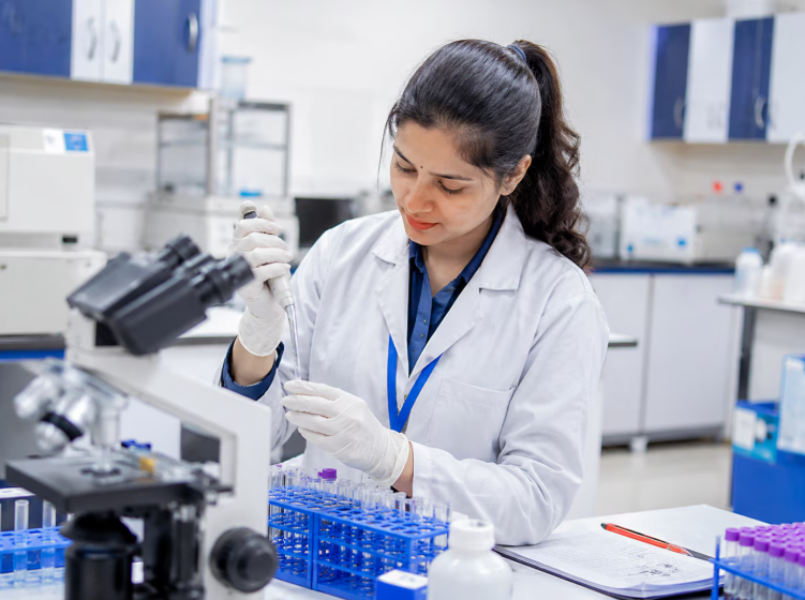
Medical laboratory work involves sample handling, equipment operation and procedural accuracy. A course offering mostly classroom instruction may leave students underprepared for workplace responsibilities.
Inspect whether the institute provides relevant facilities for:
- Sample collection and labelling
- Microscope handling
- Centrifuge operation
- Basic haematology
- Clinical biochemistry
- Microbiology
- Urine examination
- Laboratory safety
- Biomedical waste segregation
Also ask how often each student receives hands-on practice.
Mistake 4: Overlooking Infection Control
Students may concentrate on learning tests while underestimating hygiene and sample safety. Infection control is a central part of laboratory work.
Training should include hand hygiene, personal protective equipment, surface disinfection, spill management, safe sharps handling and correct disposal of contaminated materials.
Mistake 5: Believing Guaranteed Job Claims
No institute can responsibly guarantee employment. Recruitment depends on vacancies, qualification validity, interview performance, practical competence and employer requirements.
Placement assistance may involve job updates, interview guidance and employer introductions. Students should ask precisely what assistance the institute provides.
Mistake 6: Not Understanding the Technician’s Role
Laboratory technicians support diagnostic testing by following assigned procedures and maintaining accurate records. They do not independently diagnose a patient or recommend treatment.
Understanding this boundary helps students develop responsible professional behaviour from the beginning.
Frequently Asked Questions
What skills matter in laboratory technology?
Accuracy, concentration, hygiene awareness, documentation and the ability to follow procedures consistently are important.
Is practical training necessary?
Yes. Students need supervised experience with samples, instruments, safety protocols and laboratory records.
Where can qualified laboratory technicians work?
Depending on their qualification and employer criteria, candidates may explore opportunities in hospitals, diagnostic laboratories, pathology centres, blood banks and clinics.
Selecting a Program in PCMC
PCMC and Pune have a substantial healthcare and diagnostic network, making laboratory education relevant for local students. The right program should offer transparent academic information, regular practical sessions and realistic career guidance.
Students can contact KP Paramedical Institute to review the Medical Laboratory Technician program, admission requirements, laboratory facilities and current fee details.