

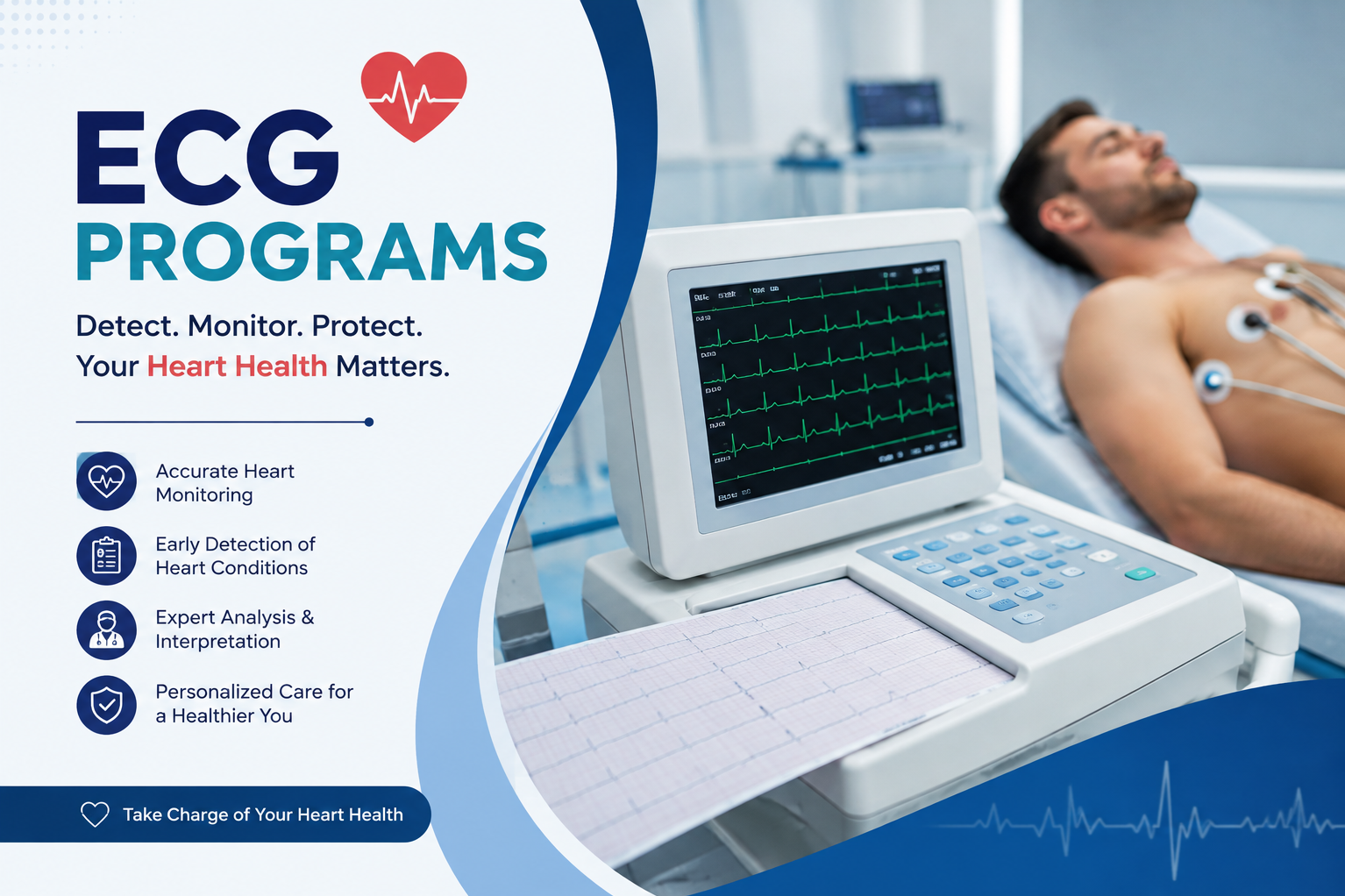
Electrocardiography is a widely used diagnostic procedure that records the electrical activity of the heart. The recording can provide healthcare professionals with valuable information about heart rate, rhythm and certain electrical changes. Producing a clear ECG requires correct patient preparation, accurate lead placement and careful handling of the equipment.
Students considering ECG programs in PCMC should compare courses based on practical exposure, qualification validity and the quality of instruction. KP Paramedical Institute offers paramedical education for students interested in developing technical skills for healthcare-support environments.
What Does an ECG Program Teach?
An ECG program generally introduces students to the structure and function of the heart, cardiac electrical activity and the process used to obtain an electrocardiogram.
Depending on the course level and syllabus, students may learn about:
- Basic cardiac anatomy and physiology
- Electrical conduction within the heart
- Components of an ECG machine
- Patient identification and preparation
- Electrode placement
- Chest and limb leads
- Standard recording procedures
- Common ECG artefacts
- Infection-control practices
- Equipment cleaning and basic maintenance
- Patient privacy and documentation
- Emergency-response awareness
The curriculum may vary between institutions. Students should obtain the current syllabus and confirm whether supervised practical sessions are included.
Why Practical ECG Training Matters
Lead placement cannot be learned effectively through theory alone. Students need supervised practice to identify anatomical landmarks, position electrodes and obtain a readable recording.
Practical training should address common issues such as:
- Loose electrodes
- Incorrect chest-lead placement
- Patient movement
- Poor skin preparation
- Electrical interference
- Incomplete patient details
- Unstable ECG traces
- Improper equipment handling
An ECG technician is responsible for recording the test according to prescribed procedures. The interpretation of ECG findings and diagnosis of heart conditions remain the responsibility of appropriately qualified medical professionals.
What to Compare Before Enrolling
Course titles may sound similar even when the training and certification differ. Students should evaluate every option using clear criteria.
Confirm the following:
- Whether the program is a certificate, diploma or part of another qualification
- Who conducts the examination and issues the certificate
- Whether the qualification is suitable for the intended career pathway
- How often practical ECG sessions are conducted
- Whether functional equipment is available
- Whether supervised clinical exposure is included
- How practical competence is evaluated
- What fees and additional expenses apply
Important course information should be provided in writing before admission.
Is ECG Technology Suitable for You?
ECG technology can suit students who are comfortable interacting with patients and following precise technical procedures. Learners need patience, concentration and respect for confidentiality.
A technician may work with patients who are anxious, elderly or experiencing discomfort. The ability to explain the recording process calmly while protecting the patient’s privacy is therefore essential.
Career Environments After ECG Training
Depending on the qualification and recruitment requirements, candidates may explore suitable opportunities in:
- Hospitals
- Cardiac clinics
- Diagnostic centres
- Health-screening facilities
- Emergency-care departments
- Multispeciality clinics
- General healthcare centres
Some positions may combine ECG recording with other diagnostic or patient-support responsibilities.
PCMC and the wider Pune region have an expanding network of healthcare and diagnostic facilities. However, completing a course does not guarantee employment. Practical competence, qualification validity and employer requirements all influence selection.
The right ECG program should develop technical discipline, patient-handling awareness and confidence in recording clear results. Comparing these factors can help students in PCMC choose a program aligned with their career plans.