

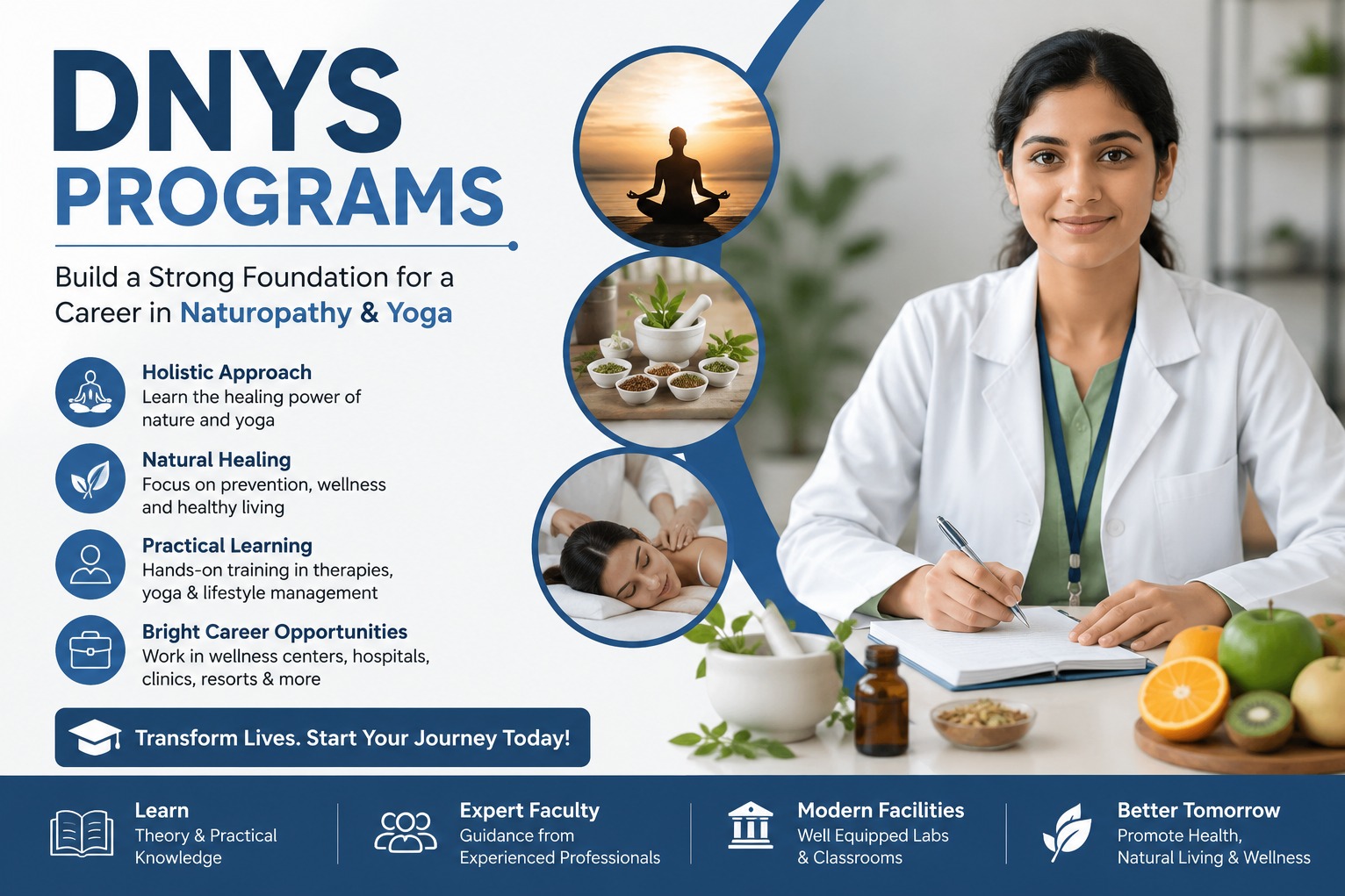
Interest in yoga, naturopathy and lifestyle-based wellness has created new learning opportunities for students who want to work in the wellness sector. DNYS, commonly expanded as Diploma in Naturopathy and Yoga Science, introduces learners to natural wellness concepts, yoga practices and the foundations of healthy living.
KP Paramedical Institute offers DNYS program guidance for students in PCMC who want to understand the course before making an admission decision. Since curricula and qualifications can vary, applicants should evaluate the program based on its actual content rather than its title alone.
Step 1: Understand What DNYS Covers
A DNYS program may combine theoretical subjects with yoga and wellness-based practical sessions. Depending on the curriculum, students may learn about:
- Human anatomy and physiology
- Fundamentals of naturopathy
- Yoga philosophy
- Yoga postures and alignment
- Breathing and relaxation practices
- Basic nutrition
- Lifestyle and wellness principles
- Personal hygiene
- First-aid awareness
- Communication and professional conduct
Ask for the current syllabus so you can see how much time is allocated to theory, practical learning and assessment.
Step 2: Examine the Practical Training
Yoga and wellness practices require regular supervised learning. Occasional demonstrations may not provide enough experience to understand correct posture, breathing, alignment and safety.
A suitable program should offer:
- Scheduled yoga practice
- Instructor-led demonstrations
- Individual corrections
- Practice in breathing techniques
- Basic wellness assessments
- Guidance on safe participation
- Opportunities to develop communication skills
The training area should be clean, suitable for physical practice and large enough for students to participate comfortably.
Step 3: Verify the Qualification
The meaning and validity of DNYS may differ across providers. Before applying, confirm:
- The full name of the qualification
- Course duration and eligibility
- Awarding or examining authority
- Recognition of the program
- Assessment and attendance rules
- Documents issued after completion
- Eligibility for further education
- Total fees and additional charges
Students should obtain these details in writing and avoid relying solely on verbal assurances.
Step 4: Understand Professional Boundaries
DNYS education does not automatically make a graduate a medical doctor. Learners must represent their qualifications accurately and work within the permitted scope of their education.
Graduates should not diagnose diseases, prescribe restricted medication or advertise guaranteed cures. Responsible wellness practice involves recognising when a person needs assessment by an appropriately qualified healthcare professional.
Frequently Asked Questions
Who can consider a DNYS program?
It may suit students interested in yoga, wellness education, healthy lifestyle practices and community-based wellbeing activities. Eligibility depends on the specific course.
Does DNYS include practical yoga training?
Many programs include yoga practice, but the number and quality of sessions vary. Students should verify the timetable before admission.
Where may qualified students find opportunities?
Depending on the qualification and local requirements, learners may explore suitable roles in yoga centres, wellness facilities, fitness organisations and community wellness initiatives.
Can students pursue further education after DNYS?
Academic progression depends on the recognition of the diploma and the admission rules of the next institution.
Exploring DNYS Education in PCMC
PCMC and the wider Pune region have a growing wellness and fitness community. Students should still prioritise qualification transparency, instructor competence and practical learning when selecting an institute.
Those interested in understanding the current DNYS program can connect with KP Paramedical Institute to enquire about eligibility, subjects, practical sessions, fees and the admission process.