

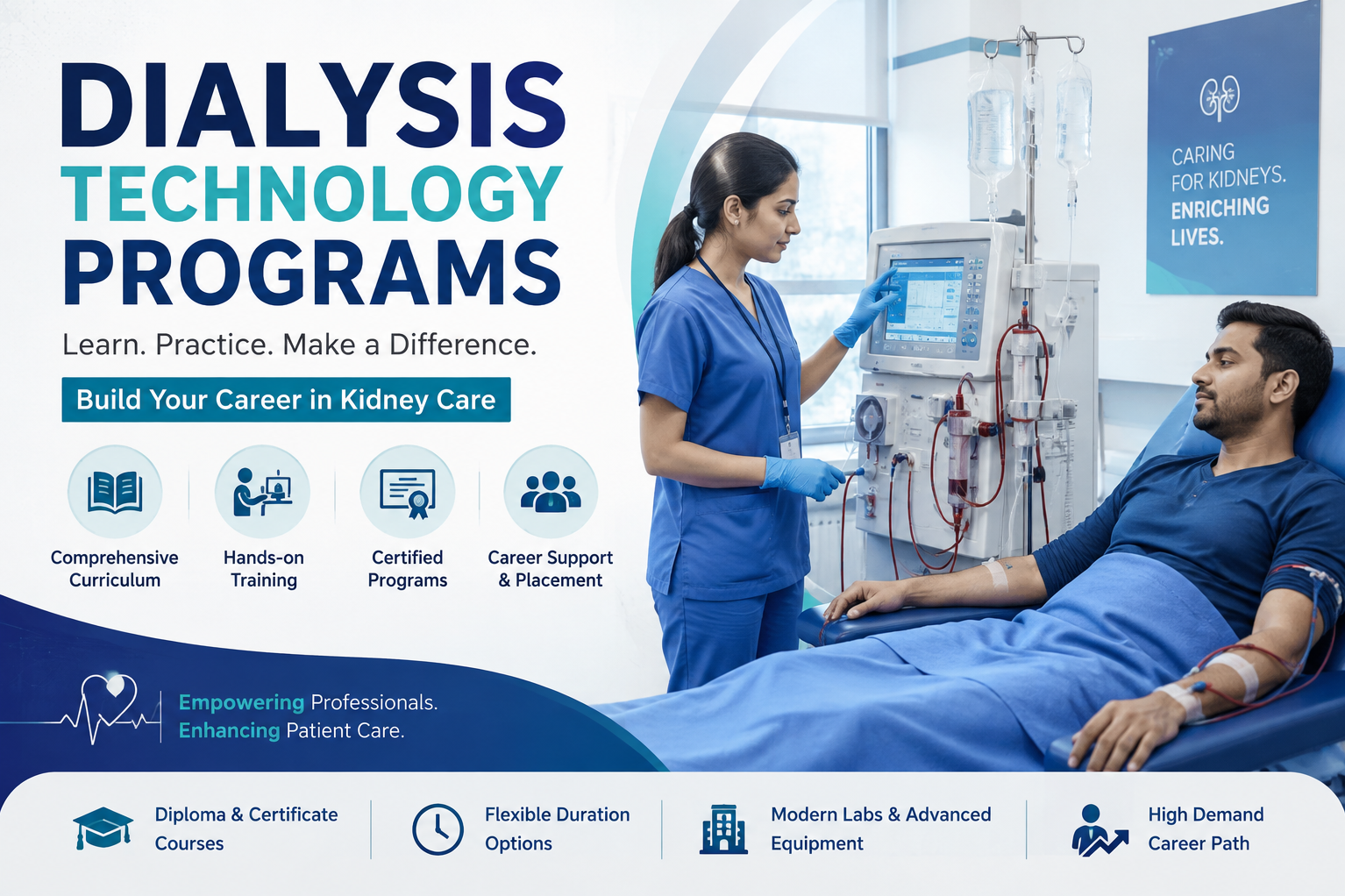
Dialysis is a specialised medical procedure used when the kidneys cannot adequately remove waste products and excess fluid from the blood. Dialysis technicians support the clinical team by assisting with equipment preparation, treatment-station readiness, monitoring procedures and infection-control practices under authorised supervision.
Because the role involves complex equipment and patients requiring ongoing care, students must evaluate Dialysis Technology programs carefully. KP Paramedical Institute provides paramedical learning opportunities in PCMC for students interested in technical healthcare and patient-support roles.
What Is Covered in Dialysis Technology Training?
A Dialysis Technology program generally introduces students to kidney function, renal disorders and the principles of dialysis. The depth of training depends on whether the program is offered as a certificate, diploma or degree.
The syllabus may include:
- Anatomy and physiology of the kidneys
- Basic understanding of kidney dysfunction
- Principles of haemodialysis
- Dialysis machine components
- Dialyser and tubing preparation
- Water-treatment awareness
- Vascular access basics
- Infection prevention
- Patient observation
- Equipment cleaning and disinfection
- Biomedical waste management
- Clinical documentation
- Emergency-response procedures
Students should review the complete syllabus rather than relying only on the program title.
Why Clinical Exposure Is Necessary
Dialysis technology cannot be understood fully through classroom lectures. Students need supervised exposure to the workflow of a dialysis unit, including preparation before treatment and safety procedures after a session.
Practical learning may introduce students to:
- Preparing a treatment station
- Understanding machine setup
- Observing pre-dialysis checks
- Following hand-hygiene protocols
- Handling consumables safely
- Recognising machine alarms
- Recording assigned observations
- Supporting disinfection procedures
- Reporting concerns to supervisors
Trainees should perform only the tasks permitted by their course, clinical facility and supervising healthcare professionals.
Facilities to Examine Before Admission
The availability of equipment is important, but students should also determine how frequently it is used for teaching.
Ask the institute about:
- Dialysis equipment available for demonstrations
- Simulation-based learning facilities
- Supervised clinical exposure
- Qualifications of instructors
- Infection-control training
- Student participation in practical sessions
- Batch size
- Practical assessments
- Internship arrangements
A training centre should provide clear explanations of how practical learning is scheduled and evaluated.
Avoid Choosing Only by Course Duration
A short course may appear convenient, but dialysis work requires an understanding of equipment, patient care and strict hygiene procedures. These abilities need repeated instruction and supervised practice.
Compare courses based on teaching hours, clinical exposure, examination structure and certification. Students should also verify the awarding authority, qualification recognition and eligibility for future studies or employment.
Who May Be Suited to Dialysis Technology?
This field may suit students who can remain calm, work according to established procedures and communicate sensitively with patients. Dialysis patients often undergo repeated treatment, making patience and professional behaviour especially important.
Students should also be prepared for:
- Shift-based working hours
- Regular patient interaction
- Strict infection-control requirements
- Equipment-focused responsibilities
- Team-based clinical work
- Accurate recordkeeping
Career Settings in PCMC
After completing an appropriately recognised qualification, candidates may explore relevant opportunities in hospitals, kidney-care centres and dialysis units. Eligibility depends on employer requirements, practical competence and applicable regulations.
PCMC and the surrounding Pune healthcare region include facilities that provide renal-care services. Students should not treat local demand as a substitute for proper training. A program with transparent qualification details, suitable facilities and supervised clinical exposure can provide a more responsible foundation for entering dialysis technology.