

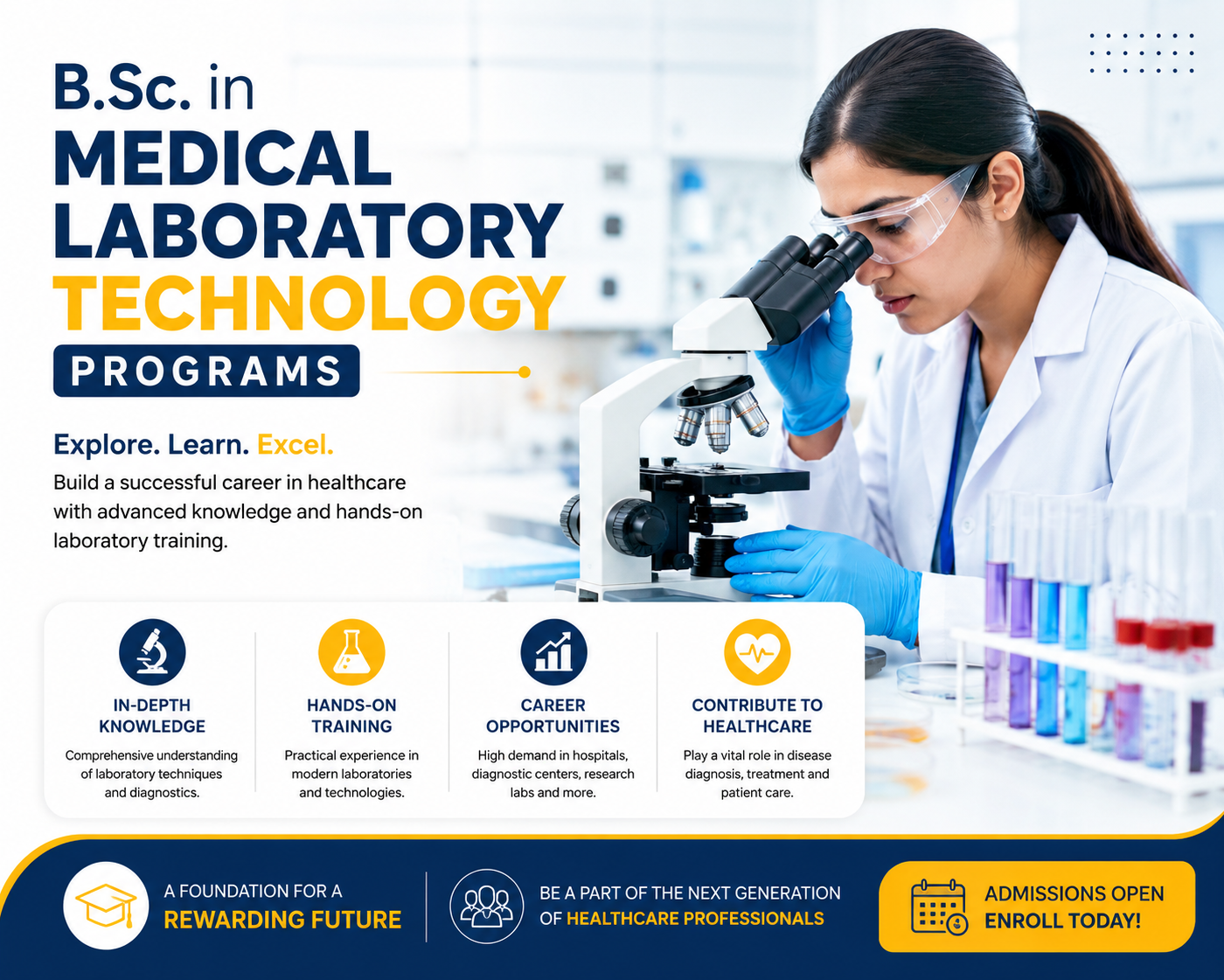
Medical laboratories play an essential role in modern healthcare. Doctors rely on laboratory findings to investigate symptoms, monitor health conditions and make informed clinical decisions. This growing dependence on diagnostic testing has created opportunities for trained professionals who can handle samples, operate laboratory equipment and follow accurate testing procedures.
For students interested in science and healthcare, B.Sc. in Medical Laboratory Technology programs offer a structured route into the diagnostic sector. KP Paramedical Institute helps learners in PCMC explore laboratory technology education with an emphasis on practical understanding and career-oriented skills.
What Is B.Sc. in Medical Laboratory Technology?
A B.Sc. in Medical Laboratory Technology is an undergraduate-level program focused on the scientific and technical processes used in diagnostic laboratories. It introduces students to the examination of blood, urine, tissue and other biological samples under established laboratory procedures.
The curriculum may cover subjects such as:
- Clinical biochemistry
- Haematology
- Microbiology
- Pathology
- Immunology
- Blood banking
- Laboratory equipment handling
- Sample collection and processing
- Laboratory safety and quality practices
The exact syllabus, duration, eligibility conditions and certification structure can vary. Students should review the current program information and verify its recognition, examining body and academic pathway before enrolling.
Skills Students Can Develop
Laboratory work requires more than theoretical scientific knowledge. Students must learn to handle samples carefully, maintain accurate records and minimise the risk of contamination or procedural errors.
A well-structured program can help learners develop skills in:
- Sample management: Correctly receiving, labelling, storing and processing specimens.
- Equipment operation: Understanding the basic use and maintenance of laboratory instruments.
- Testing procedures: Following standard processes while performing routine laboratory tasks.
- Data recording: Documenting observations and test information accurately.
- Safety compliance: Using protective equipment and following biomedical waste-handling practices.
- Professional coordination: Communicating with laboratory personnel and other healthcare teams.
Attention to detail is especially important because even a small procedural mistake can affect the reliability of laboratory findings.
Where Can Laboratory Technology Graduates Work?
After completing an appropriately recognised qualification, graduates may explore suitable entry-level opportunities in different healthcare and diagnostic environments. Possible workplaces include:
- Diagnostic laboratories
- Hospitals and healthcare centres
- Blood banks
- Pathology laboratories
- Research-support facilities
- Public health laboratories
- Medical equipment and diagnostic organisations
Actual job eligibility depends on the qualification obtained, local regulations, employer requirements and the candidate’s practical competence. Some graduates also continue their studies in specialised areas of laboratory science.
Why PCMC Students Consider This Field
PCMC is part of a rapidly developing healthcare and education region in Maharashtra. The presence of hospitals, clinics and diagnostic facilities makes healthcare-support education relevant for students seeking locally accessible career training.
Studying within the PCMC area can also reduce daily travel for learners from Pimpri, Chinchwad and surrounding neighbourhoods. However, convenience should not be the only selection factor. Students should examine laboratory facilities, faculty support, practical sessions and the transparency of course information.
Questions to Ask Before Applying
Before selecting a program, ask the institute:
- What are the current eligibility requirements?
- Which authority or examining body is associated with the program?
- How much practical laboratory training is included?
- Are the instruments used for demonstrations functional and relevant?
- What is the attendance and assessment process?
- Is internship or clinical exposure included?
- What documents are issued after successful completion?
- What are the complete fees and additional expenses?
B.Sc. in Medical Laboratory Technology programs can suit students who enjoy biology, practical science and accuracy-focused work. A careful review of the curriculum, practical resources and qualification details will help PCMC students choose an education pathway aligned with their long-term plans.